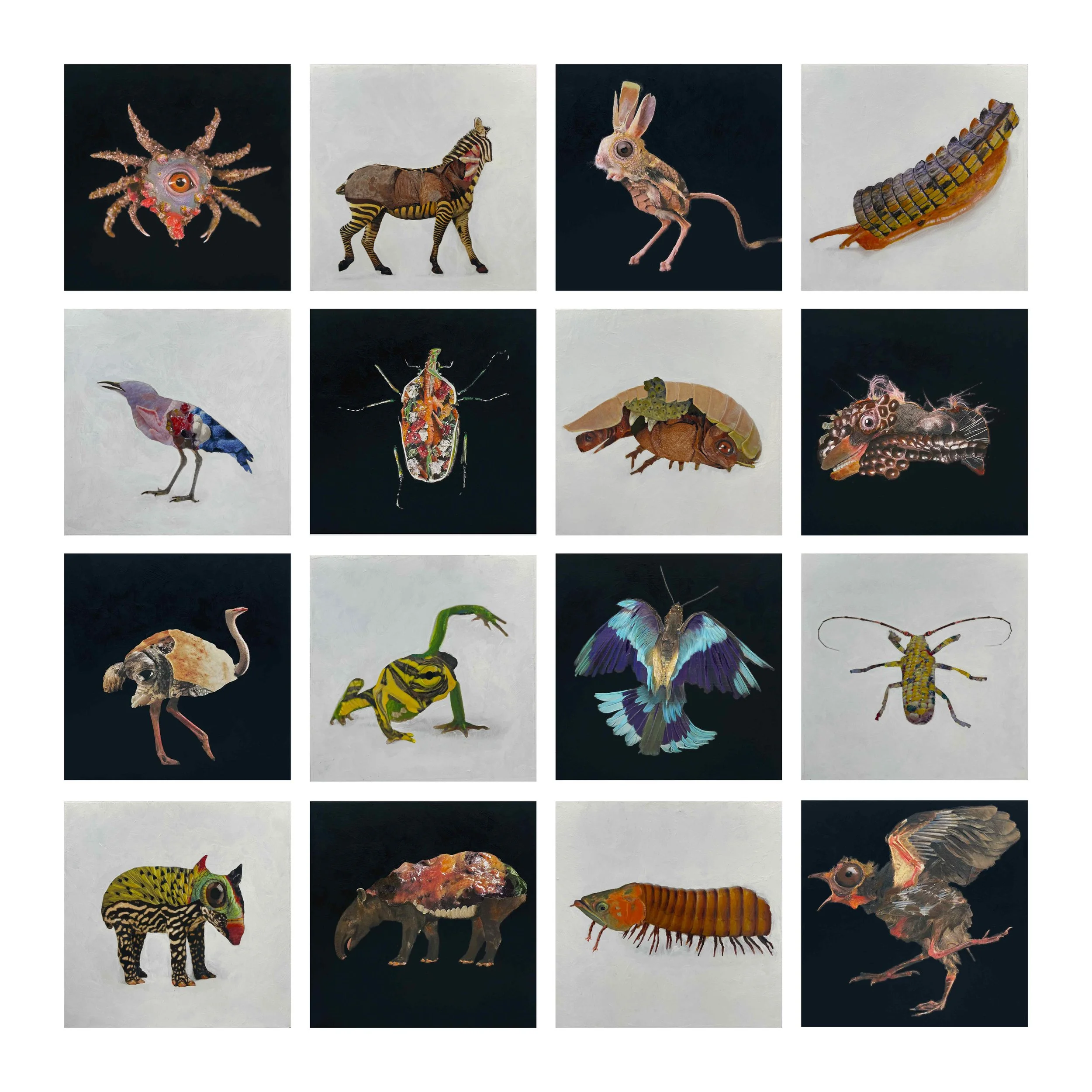
The panpsychist’s dilemma
-
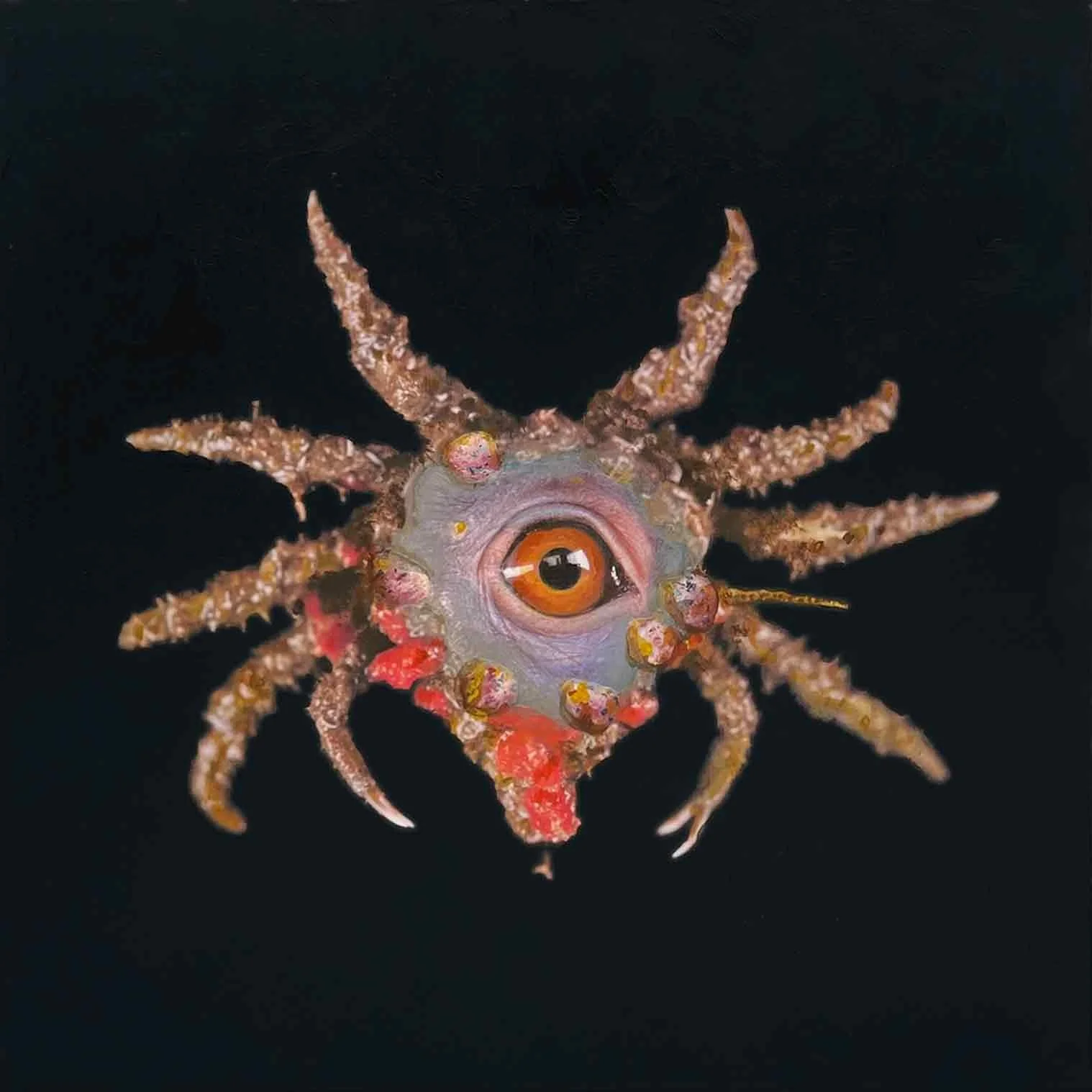
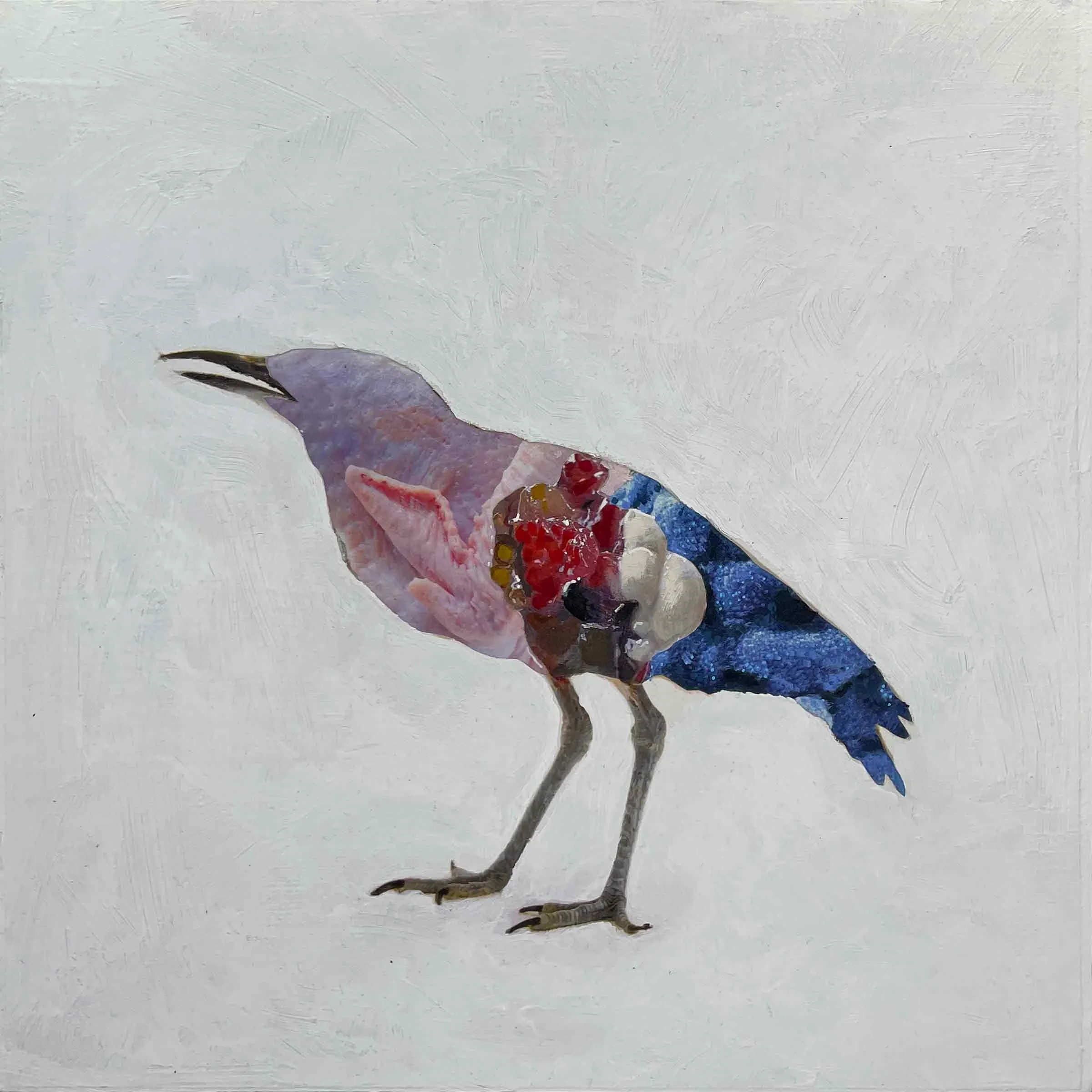
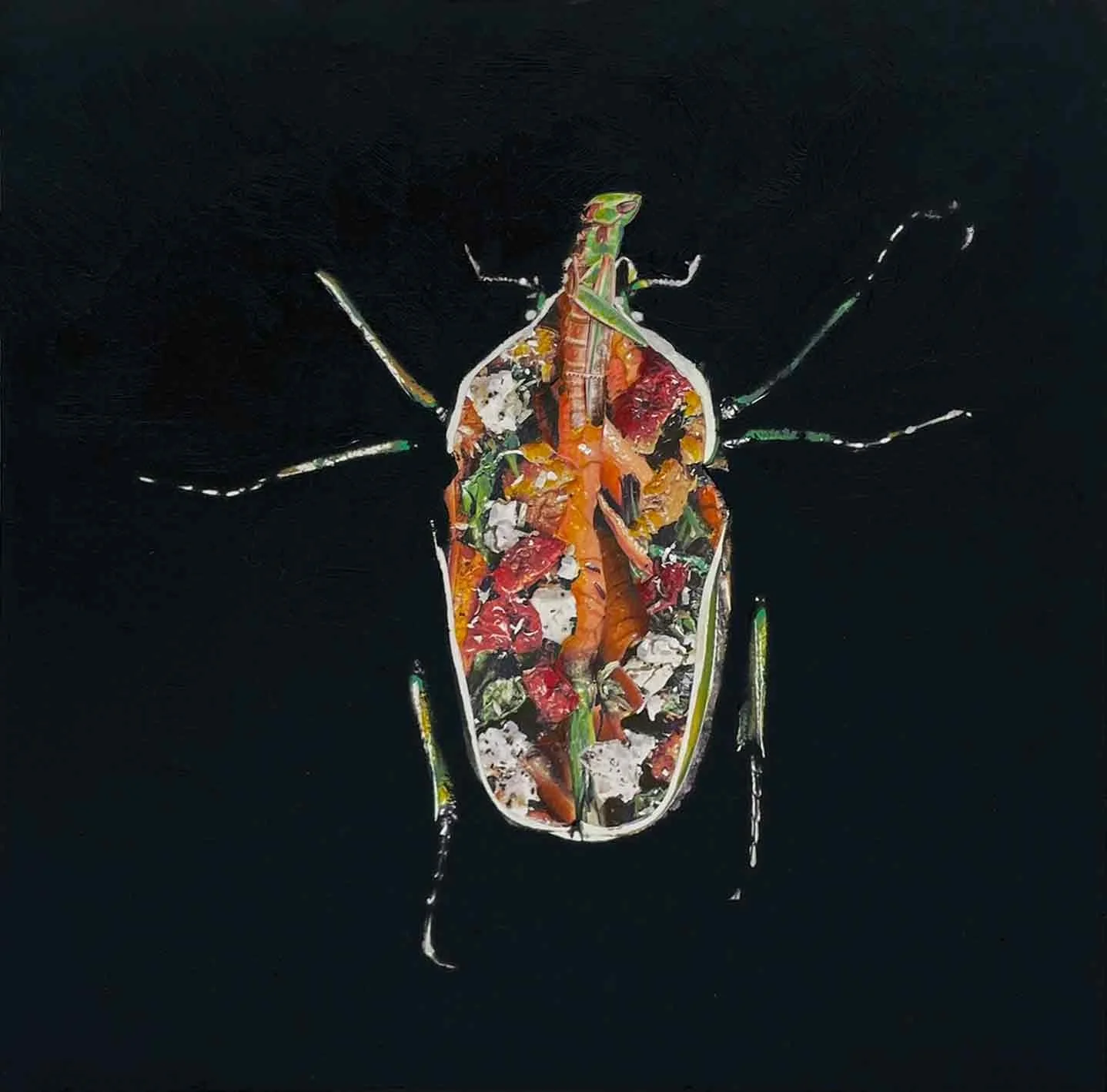
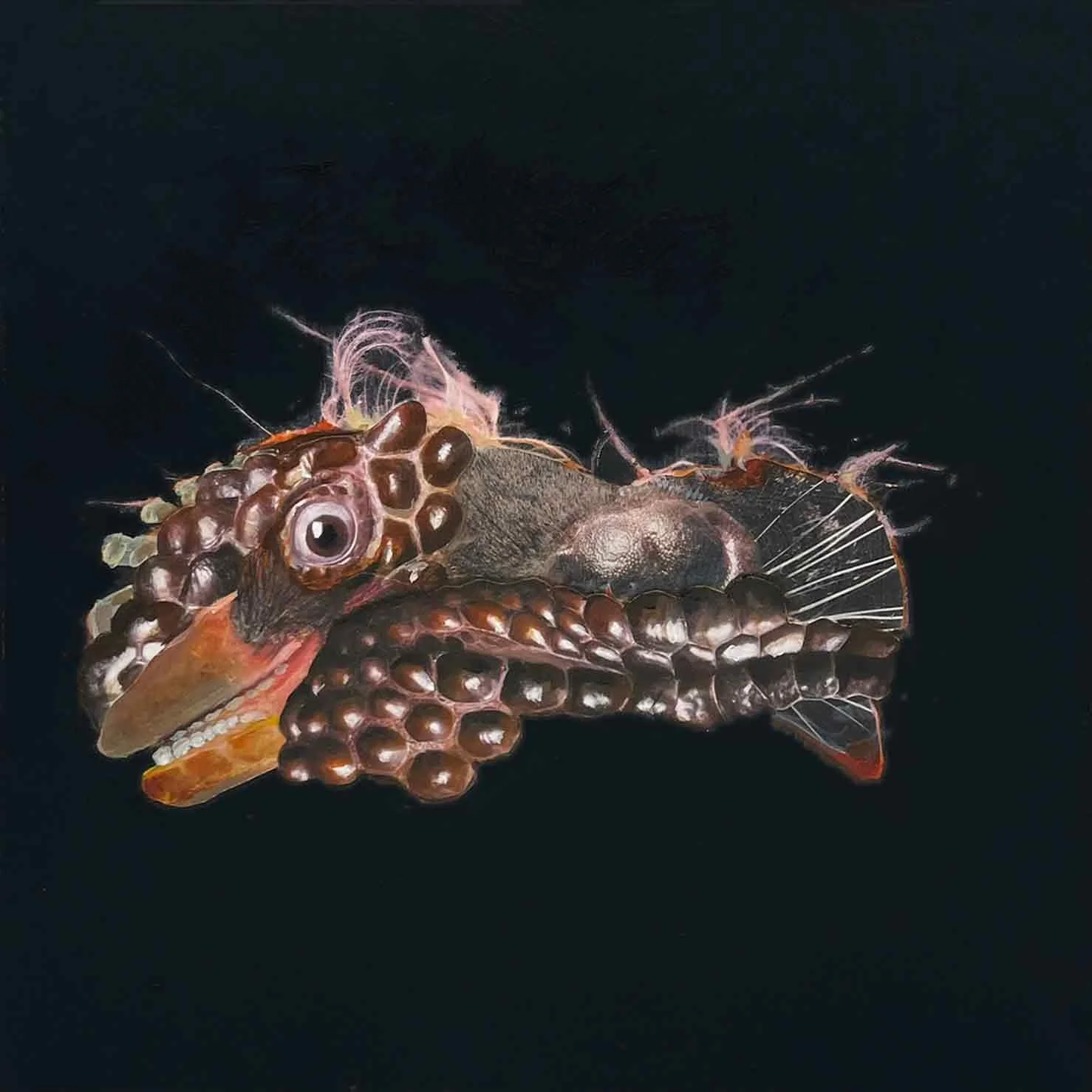
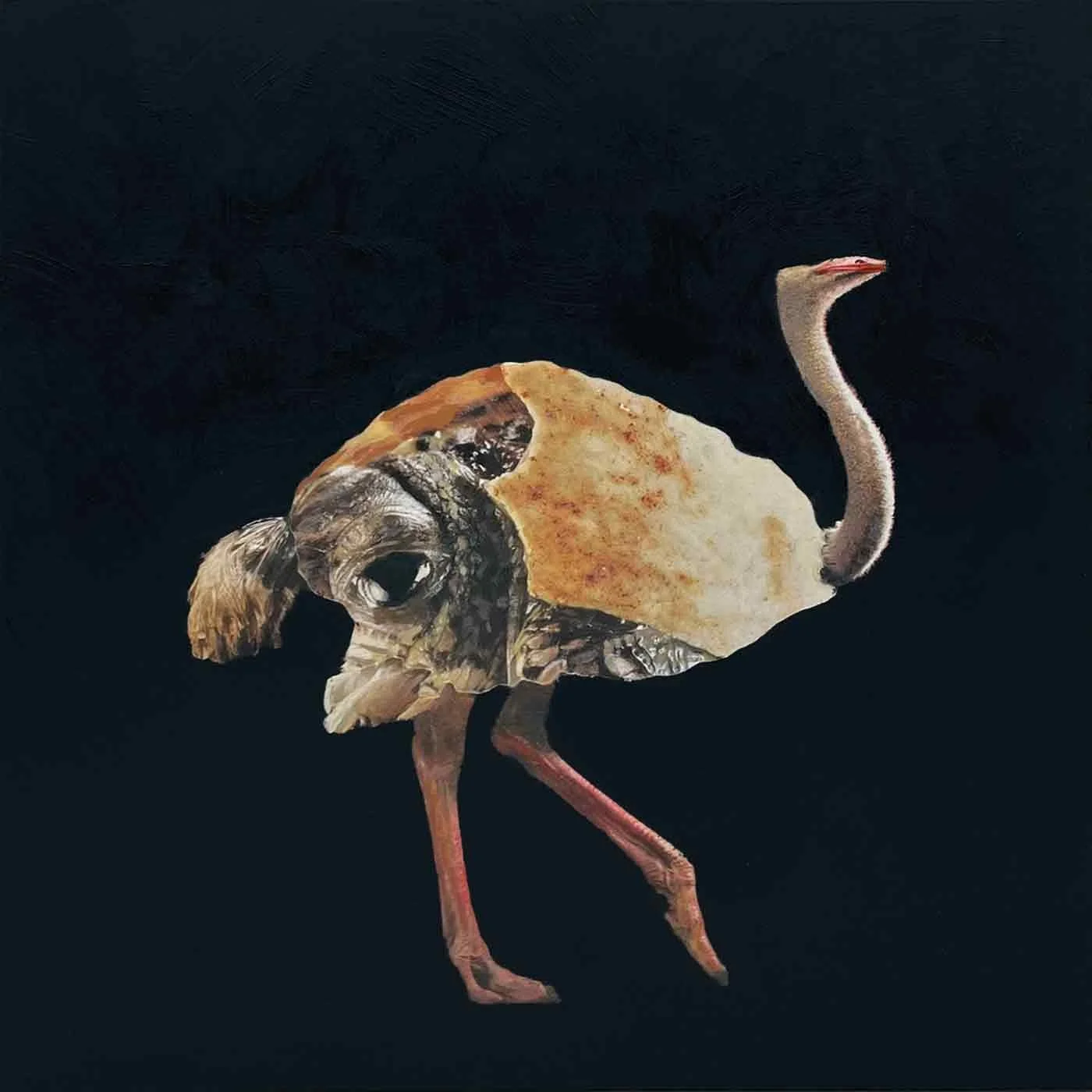
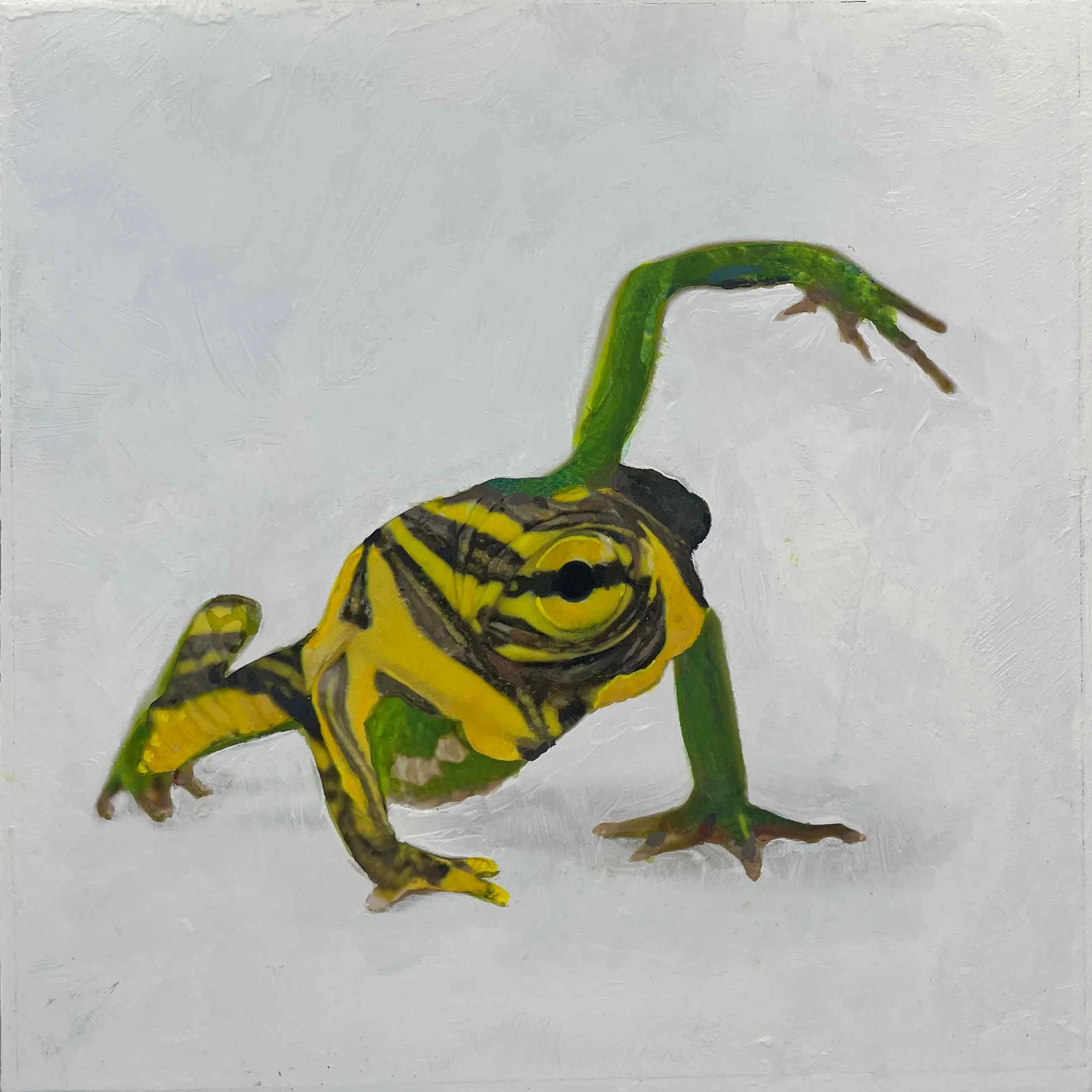
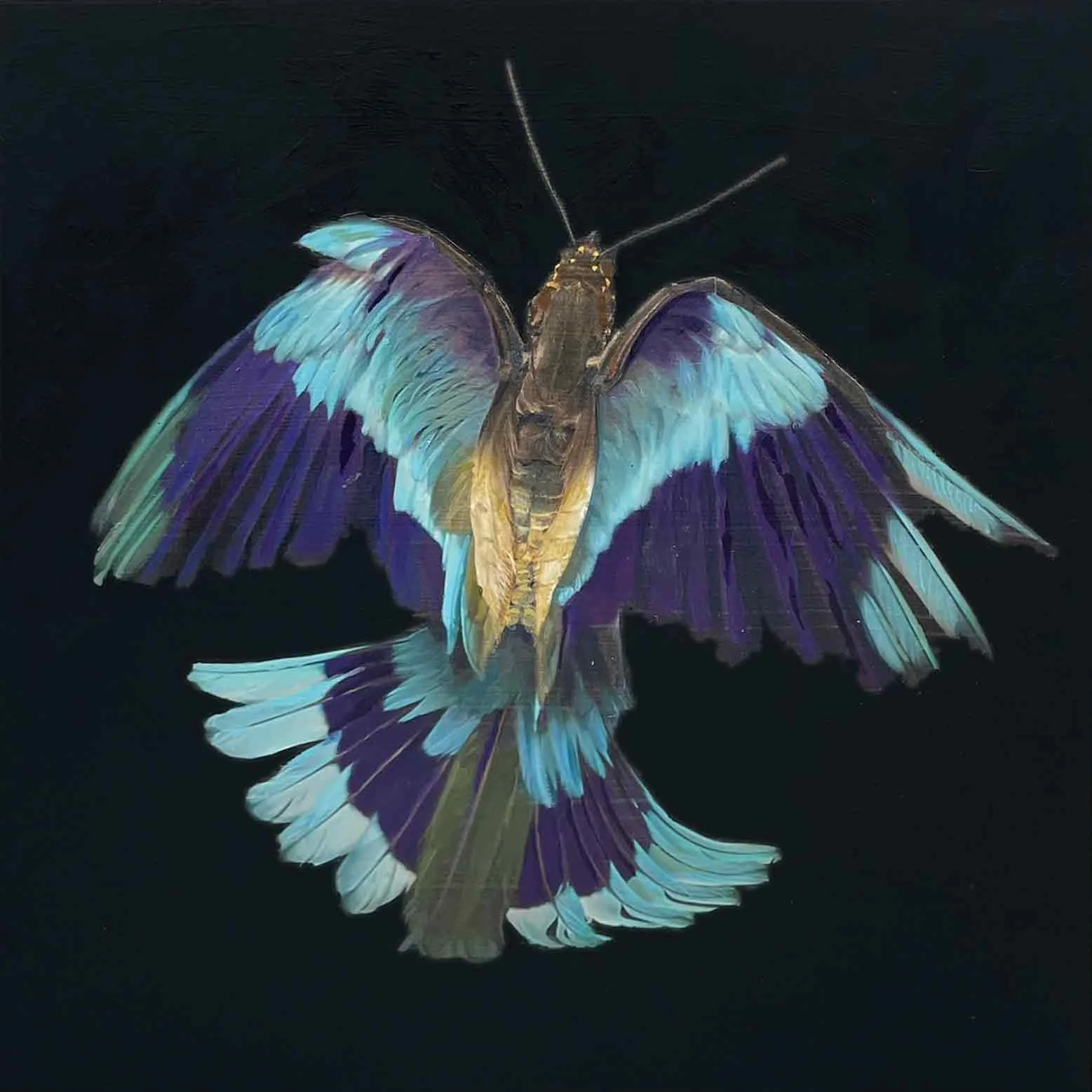
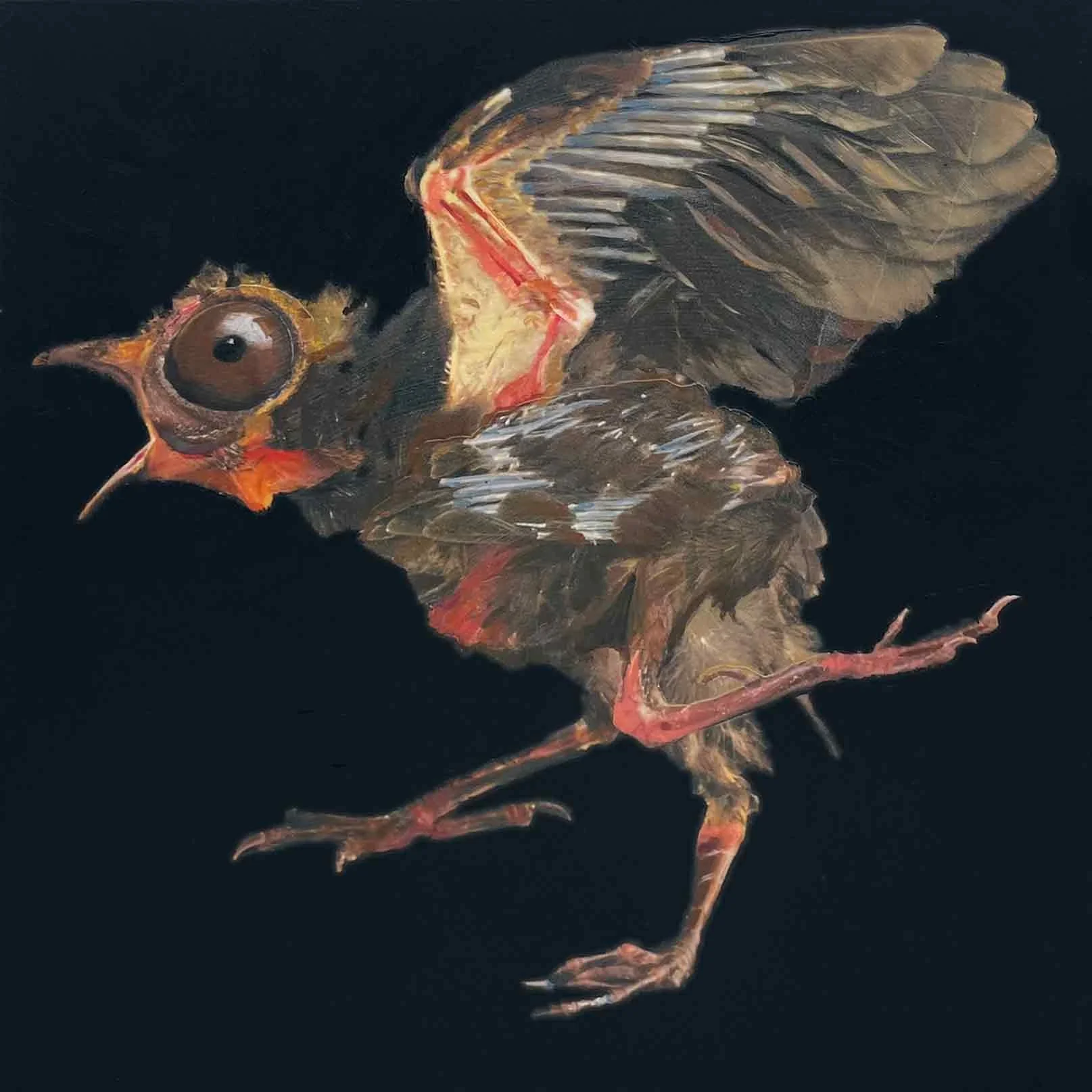
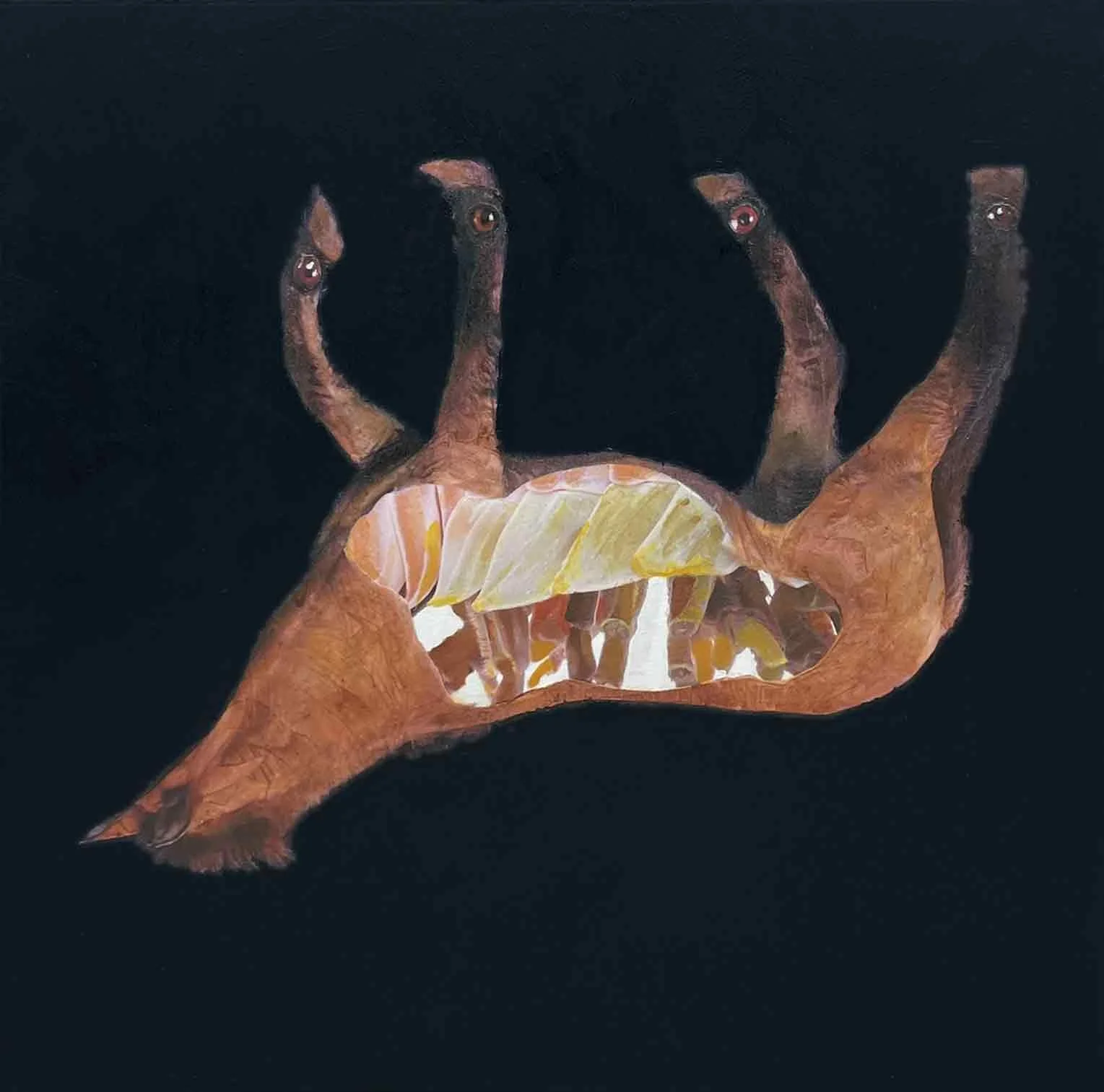
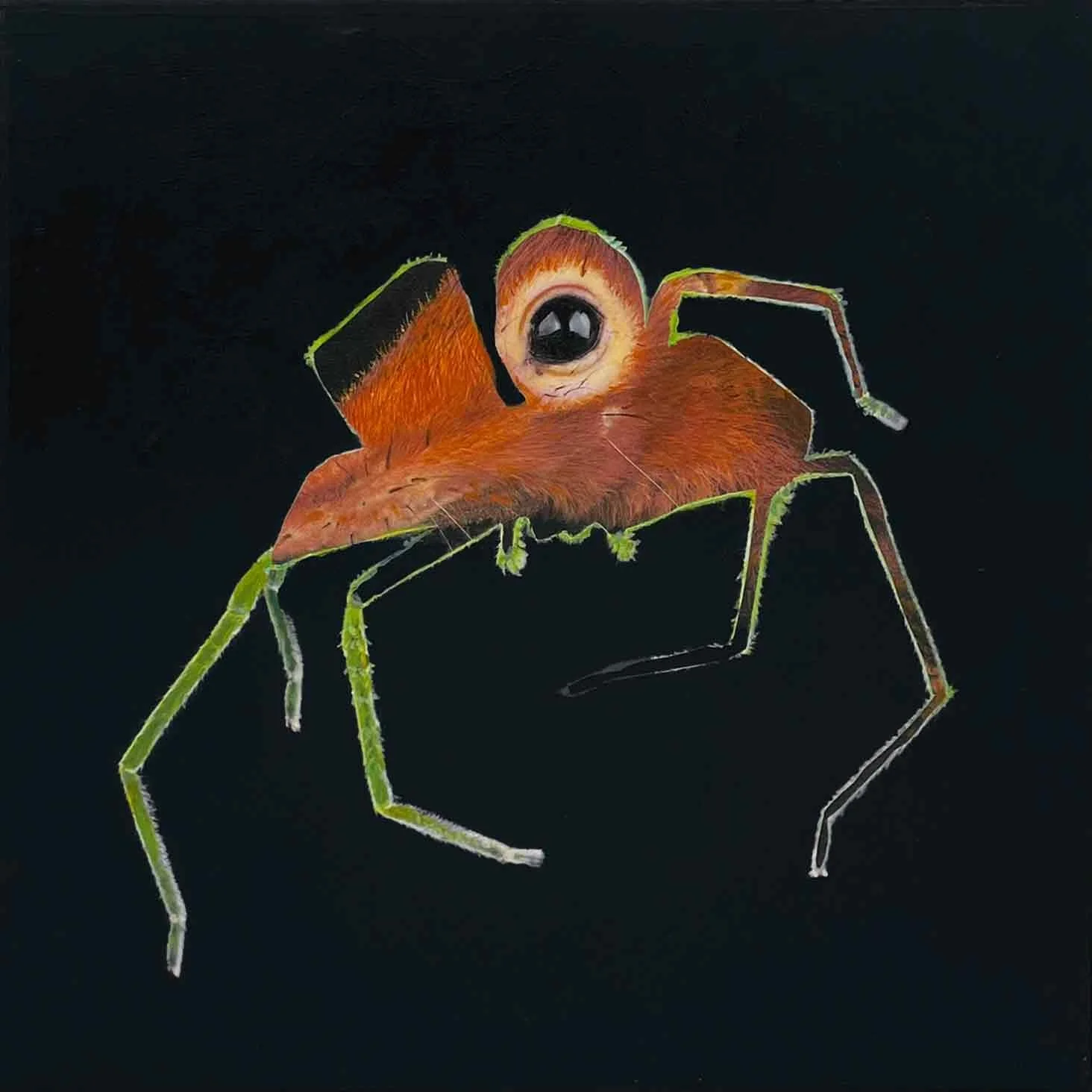
I recall the specific moment this series sparked to life: I had cut out a leopard from a garage sale coffee book so I could use parts of it as a base layer of a painting, and I absently tossed the page with the missing silhouette of the leopard onto a pile of other discarded cuttings as I readied to make the leopard an unrecognizable shaping of spots and limbs.
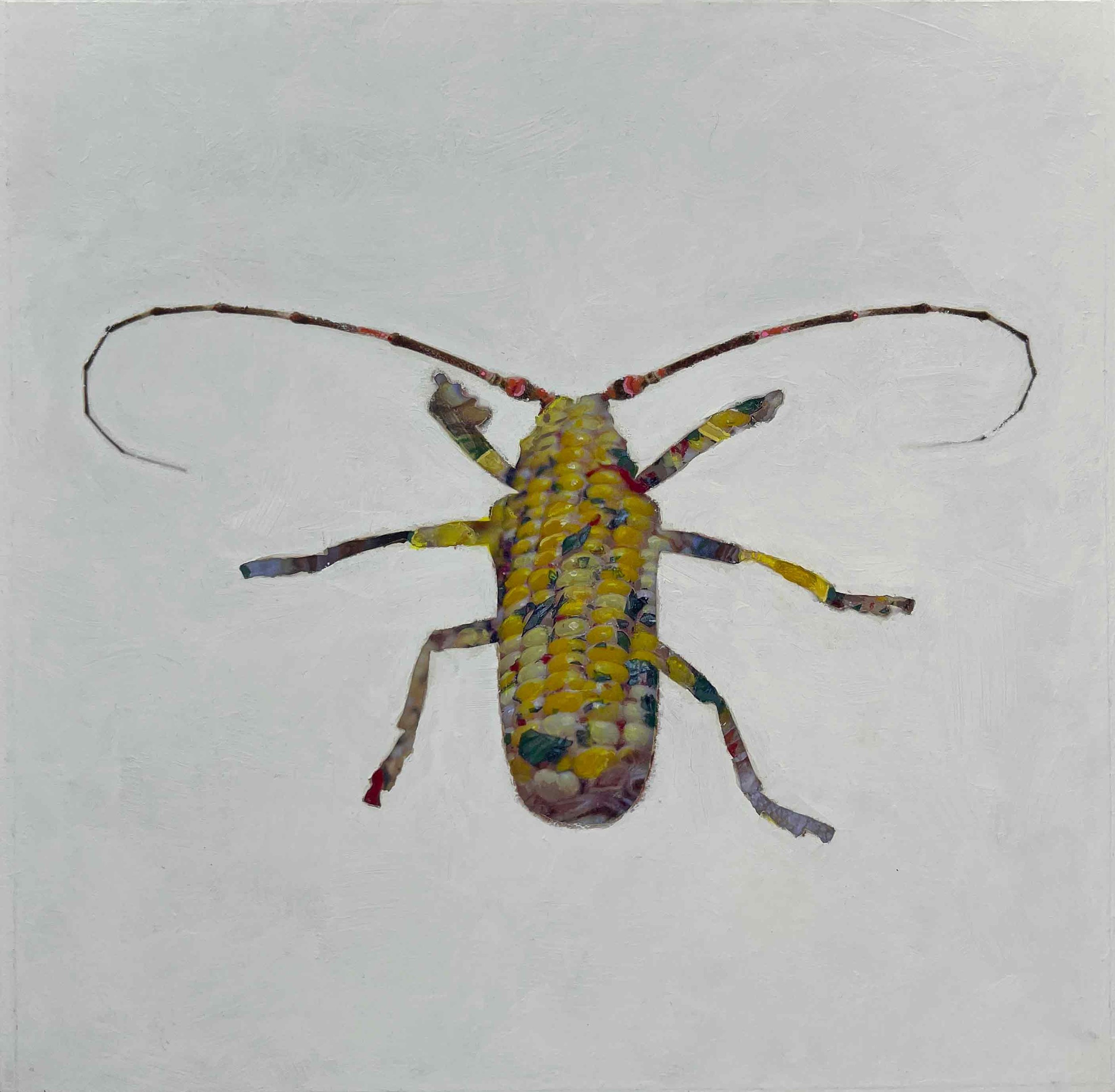
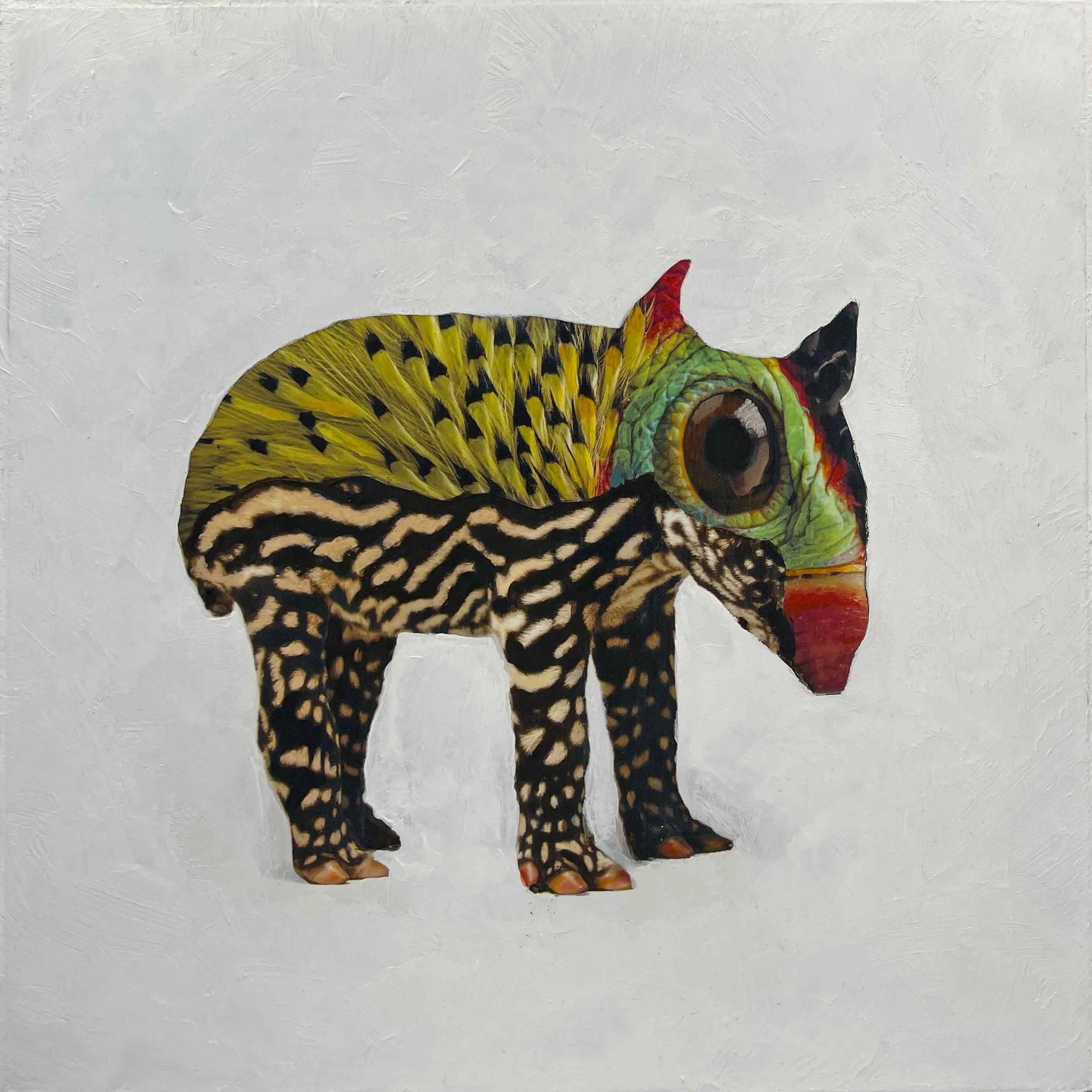
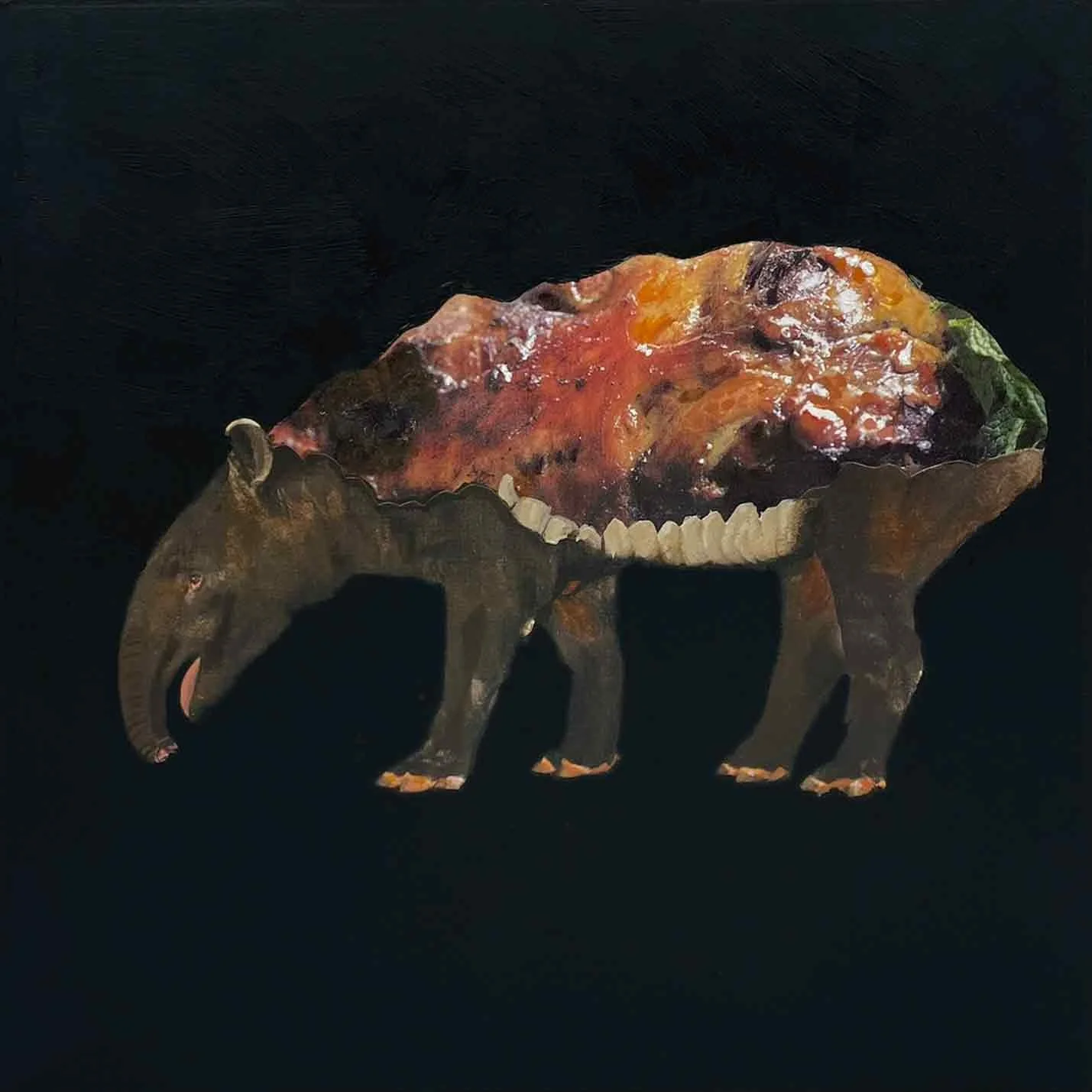
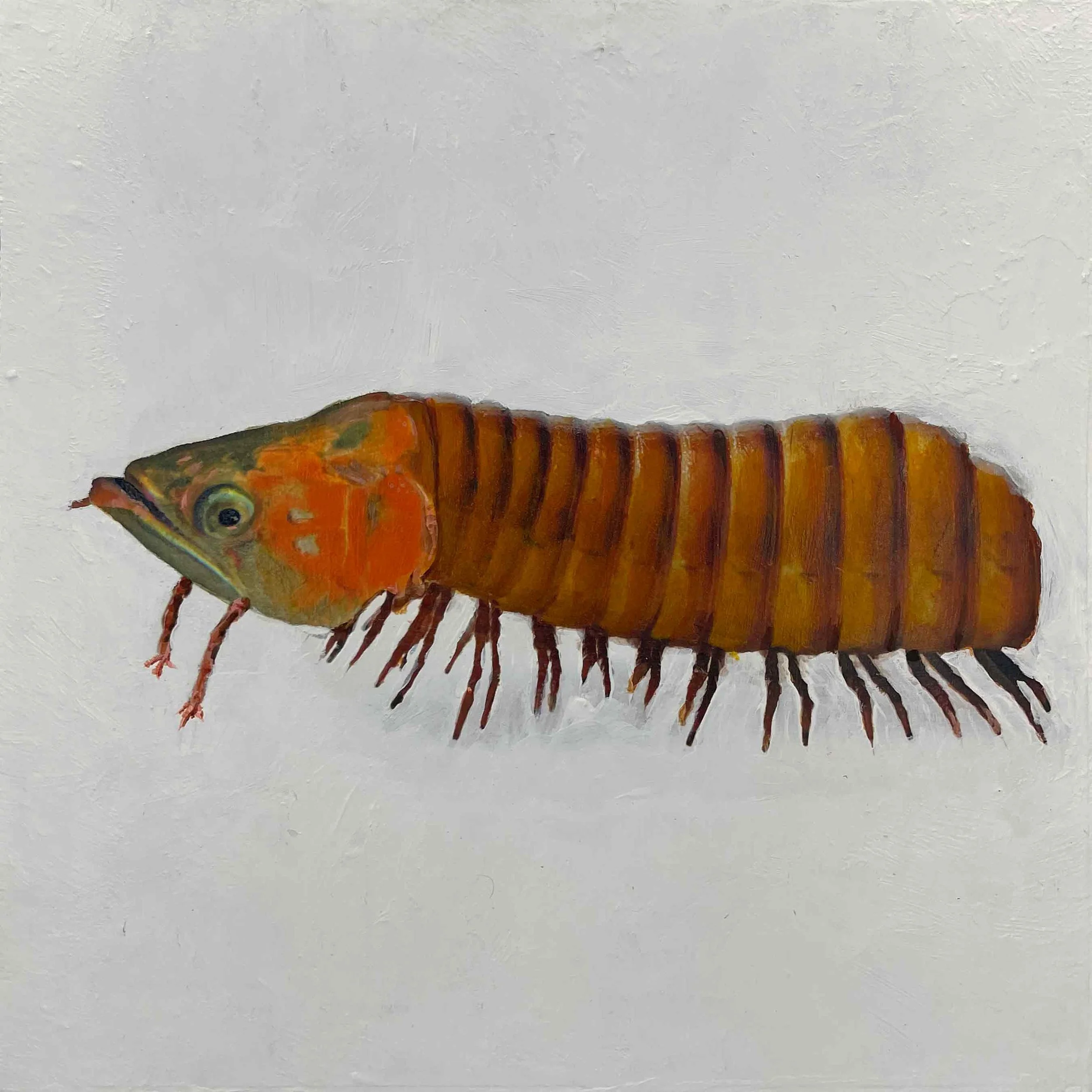
When I glanced to the discard pile, what I saw was a white sheet through which a hodgepodge of scraps—images of fish, plants, food—were in the shape of a leopard: a big cat made of blueberries, ivy, tacos.
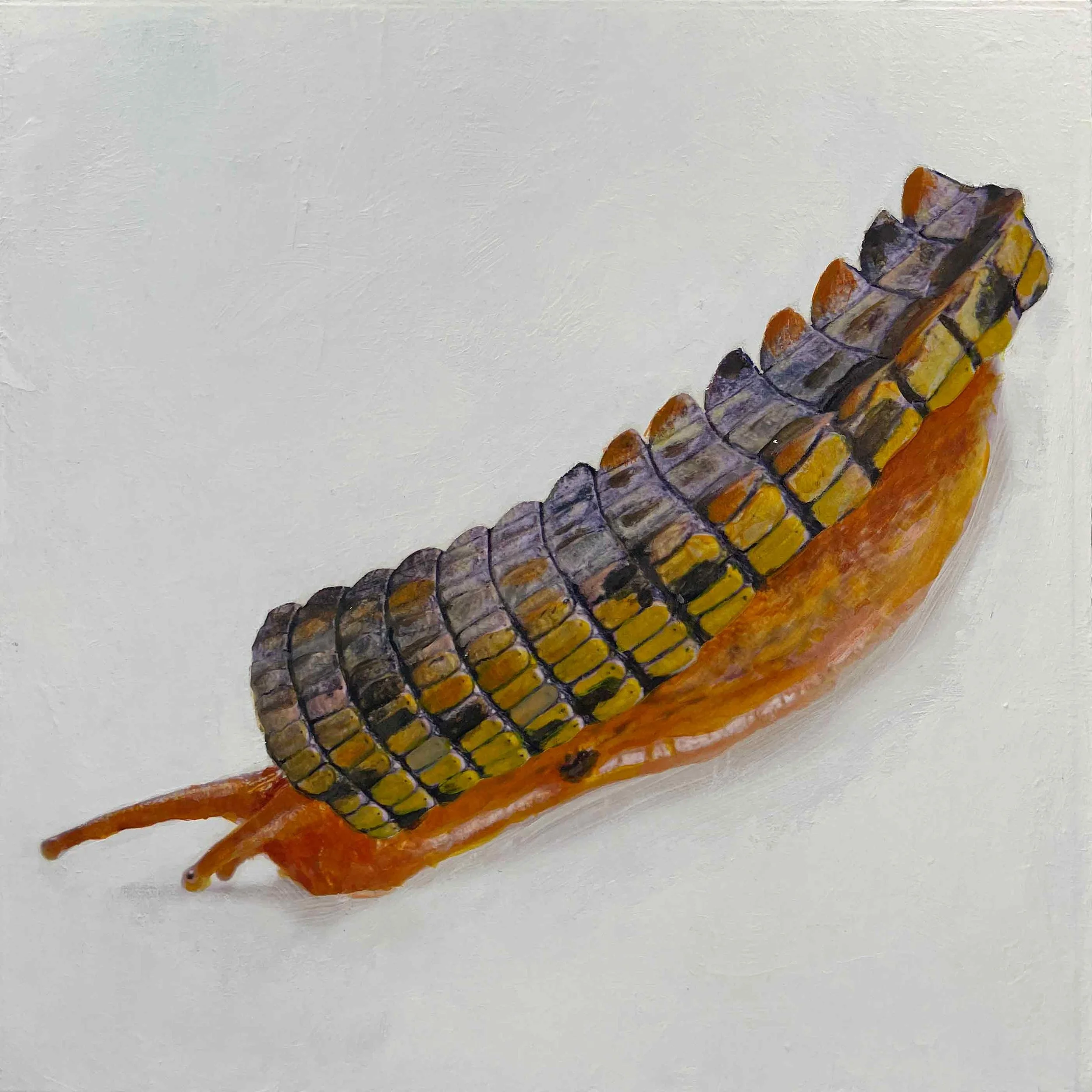
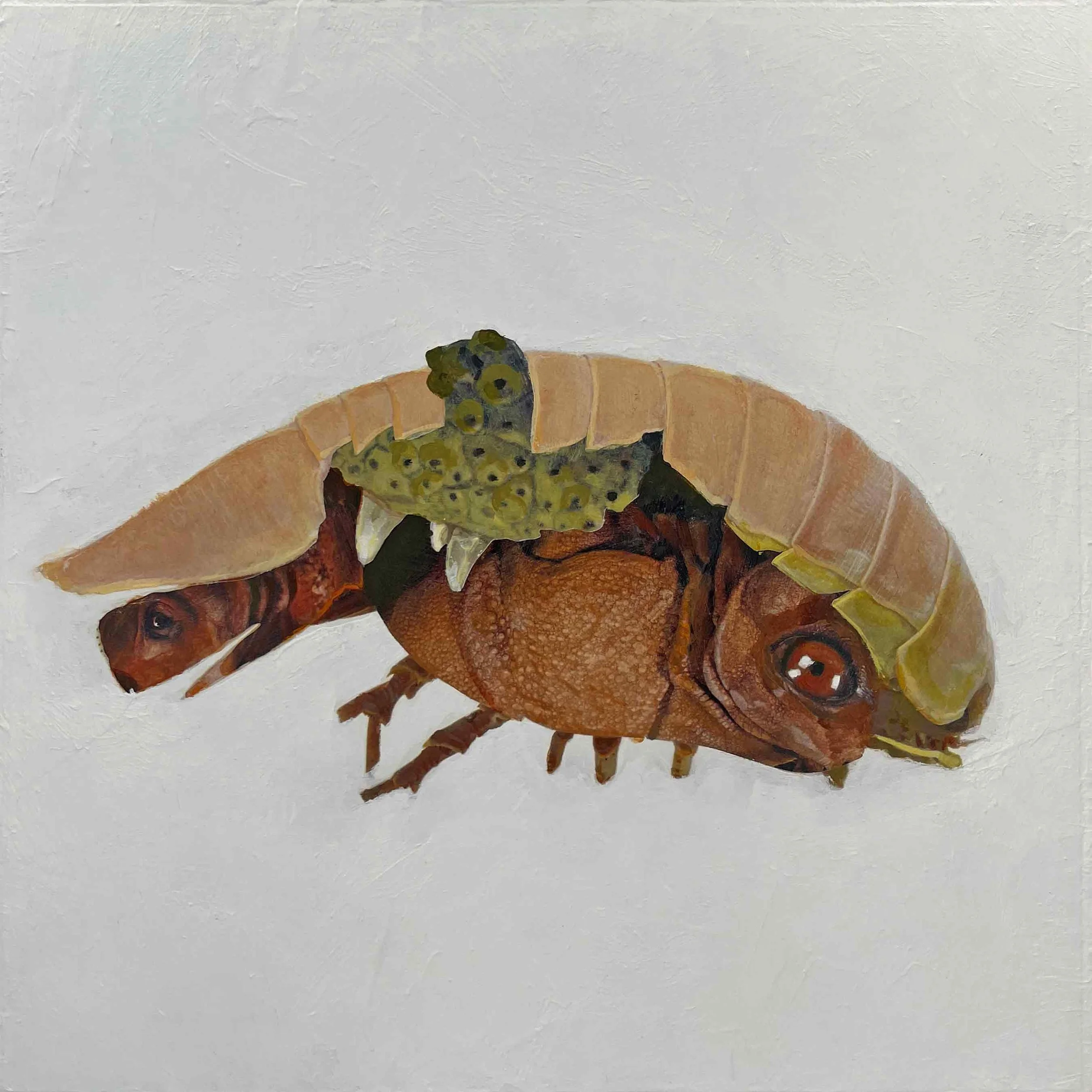
The thought that the shapes life creates often seem arbitrary, and the divisions we think we see are fluid, feeds my sense of animism. How different, really, are animals from each other, or from plants, and either from food?
There is a concept that spirit/awareness is a ubiquitous property of the natural world. Does everything have experiences? The belief that sentience is everywhere doesn't just enchant the world, it also indicts it. You lose the comfortable boundaries between species, between eater and eaten, between one body and the matter that could just as easily have been arranged into something else.
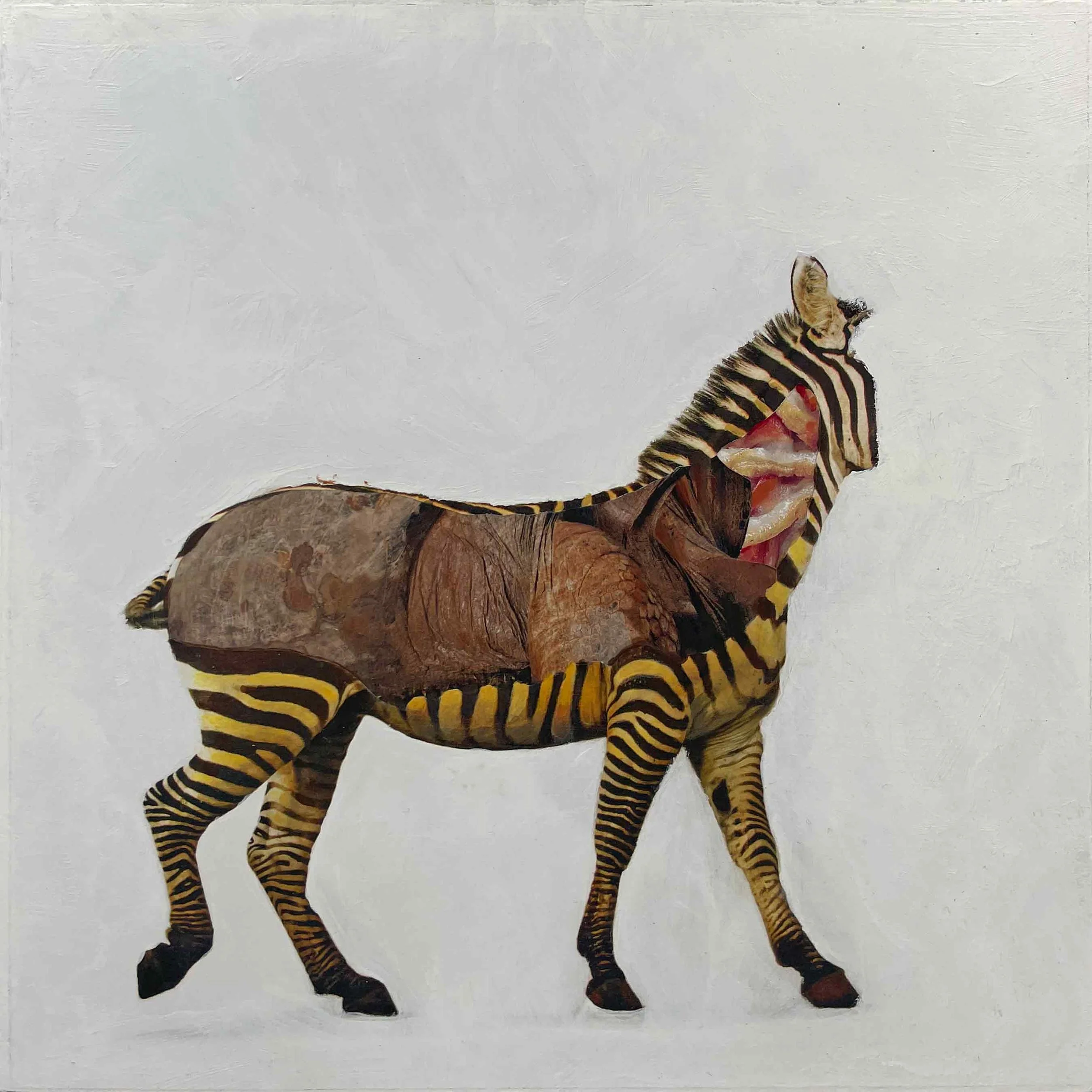
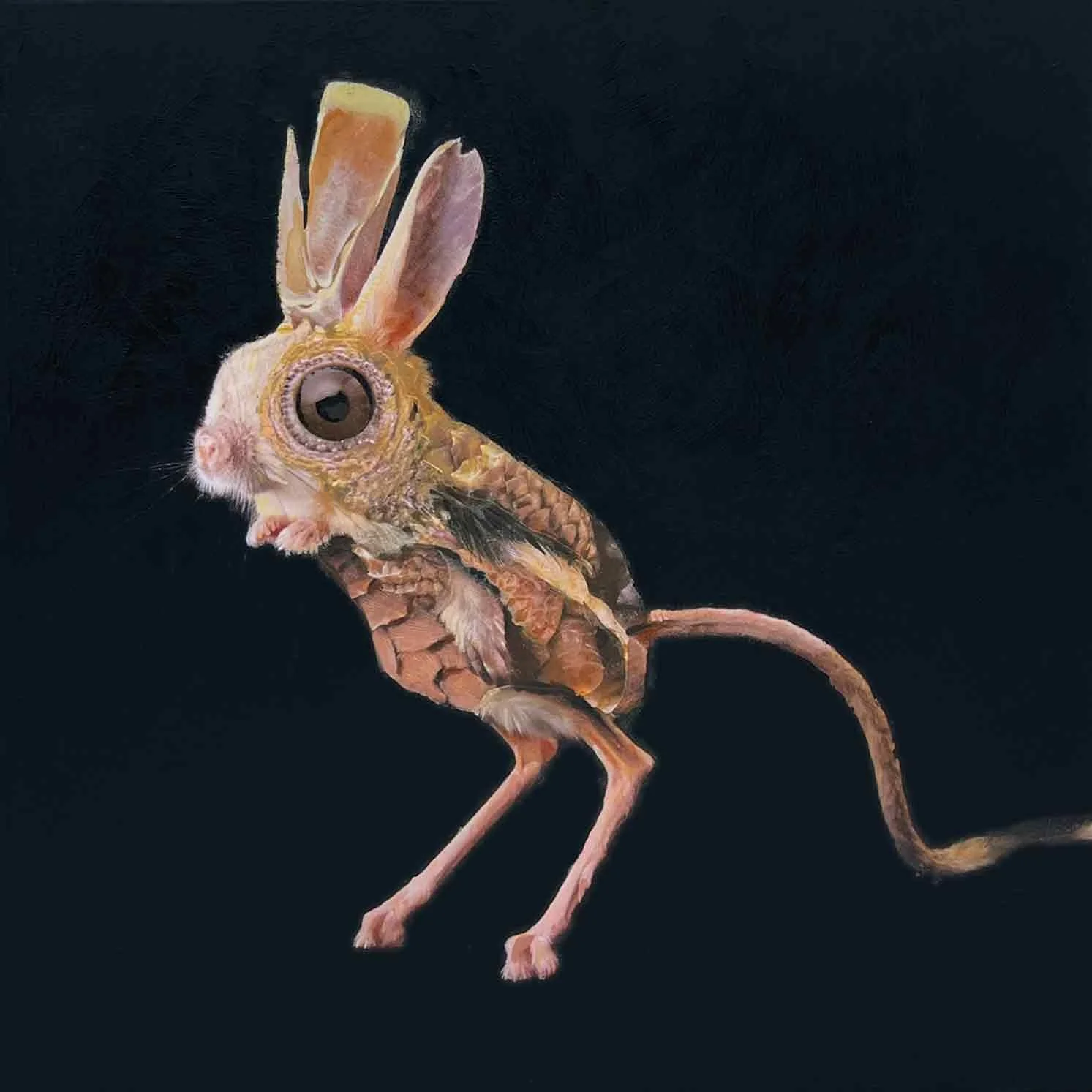
These paintings make you look at that bind rather than just think about it. Nothing is fixed or namable, clearly one thing or another, both horror and reverence set on a background that provides a counterpoint in binary black or white.
The medium of these paintings, like their content, is hybrid, in-between. My working method here mimics the way life evolves, not from a blank slate, but using existing parts that work and adding to or changing them, layering and changing. I reach for paint or for scraps, whatever is going to get the job done. And I don’t work with an endpoint in mind. I watch the image develop as I go along, and love being surprised.